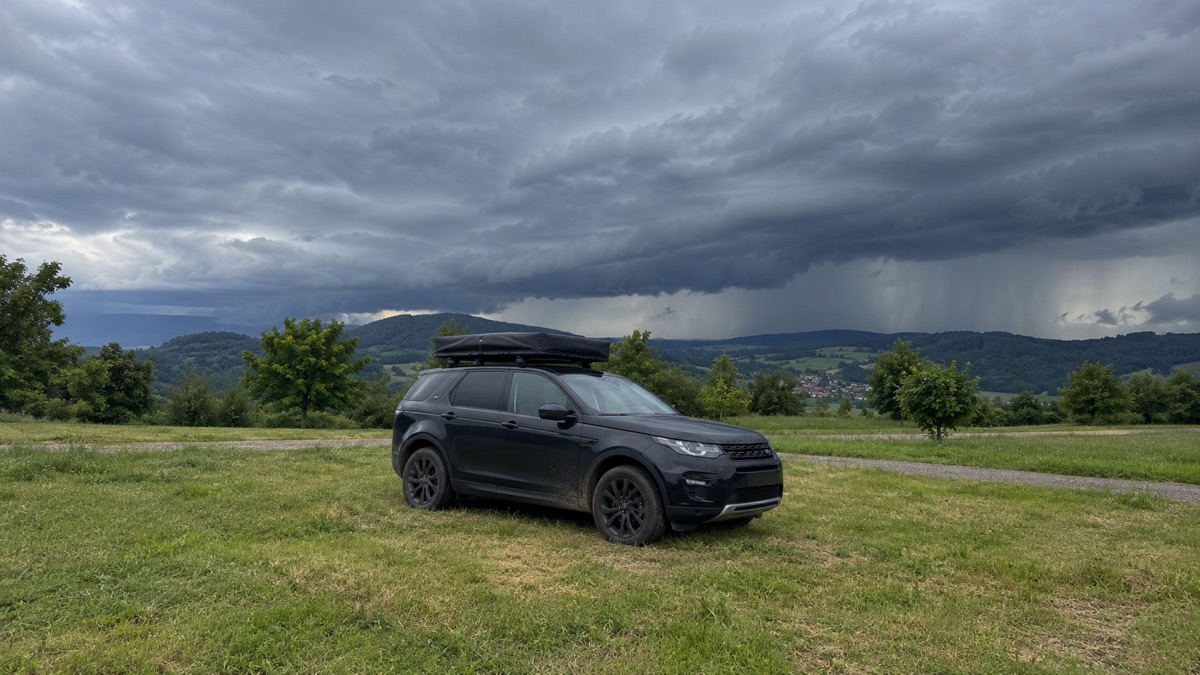
Summer thunderstorms often arrive faster than you'd think. The good news: your car is one of the safest places you have outdoors.
How close is it?
Count the seconds between lightning and thunder. Three seconds is roughly one kilometre, five seconds roughly a mile. If it's less than 30 seconds, the storm is closer than about ten kilometres and lightning can strike where you are. Time to get into the car. Rule of thumb: if you can hear thunder, you're already within reach.
Where you are safe from lightning
- In a car with a metal roof, windows and doors closed. The body channels the current around the outside.
- In solid buildings, such as the toilet block.
- Not safe: tents, roof tents, awnings and convertibles with a fabric roof.
- For motorhomes with a plastic body, it's worth checking the manual to see whether lightning protection is built in.
Lightning and your roof tent or tent
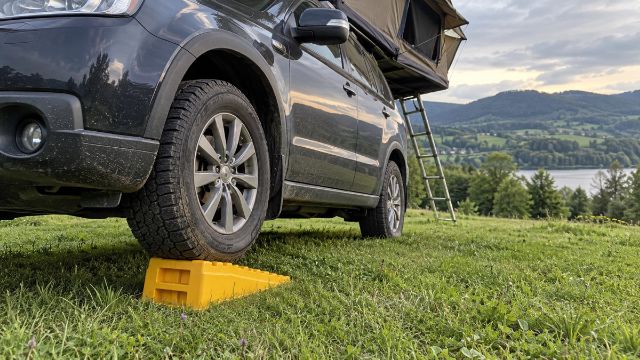
Out of the roof tent, into the car. A roof tent sits up high and doesn't protect you. The same goes for a tent. When it thunders, move to the car or into a building.
If it catches you outside
- Head straight for the car or a solid building, even if it's a few minutes away. That protects you far better than anything else on this list.
- Get away from lone trees, hilltops, summits and poles.
- Get out of the water and away from the shore.
- Only if there's really no other way: go into a hollow, crouch down, feet close together, don't lie down. It's a last resort and protects you very little.
- In a group, keep a few metres apart from each other.
In the UK, the Met Office issues the official weather warnings, including for thunderstorms. Elsewhere in Europe, Meteoalarm shows the warnings of each country's national weather service on one map.