A campfire is part of it for many people. In many countries, though, open fire in nature is only allowed in designated places, and near forests often not at all. The rules differ by country and region, and they often get stricter at short notice when it's dry.
Before you light it
- Is fire allowed here? On campsites, ask at reception. Elsewhere, local rules and the landowner decide. In Germany, for example, fire in the forest is generally forbidden except in designated places.
- Many places also set a minimum distance from the forest or ban fires completely in dry spells. Look out for signs and ask locally. In Scotland, the Outdoor Access Code asks you to use a stove wherever possible and never to light a fire in dry periods, in woods or on peaty ground.
- Check the wildfire danger. The EU's European Forest Fire Information System (EFFIS) shows a fire danger forecast for all of Europe, and many national weather services publish their own warnings.
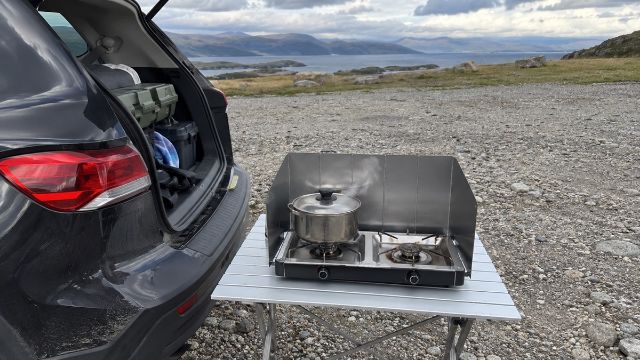
- When it's windy and dry: no fire. The stove does the job too.
When it's burning
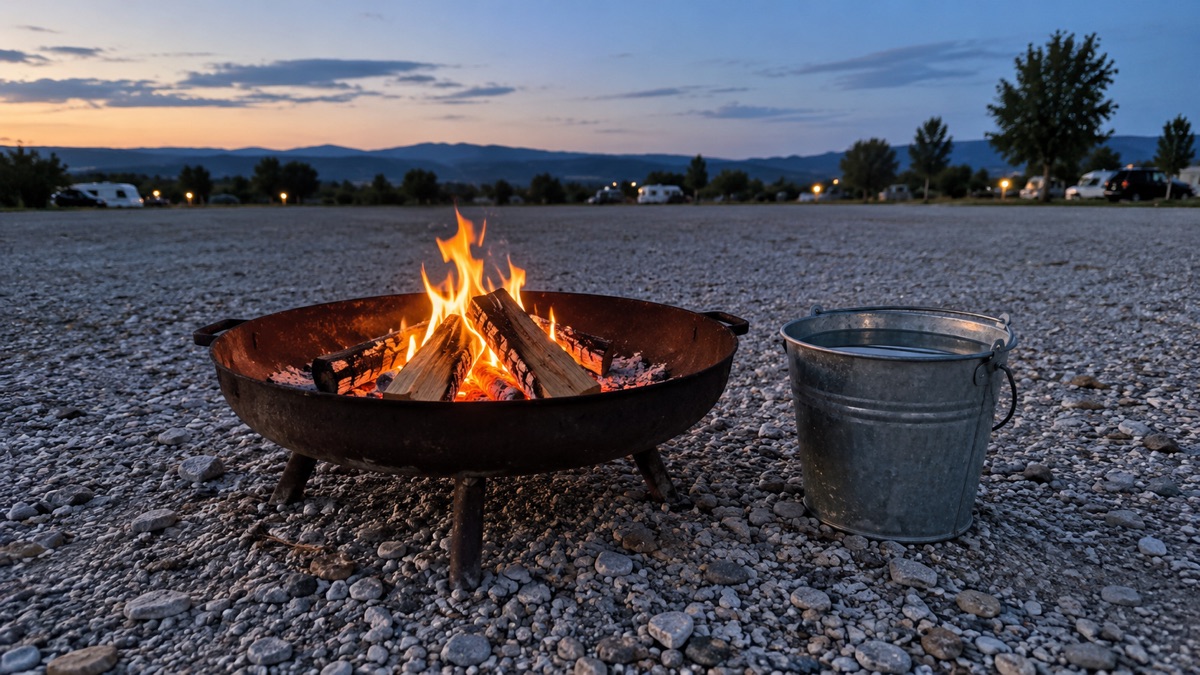
- Only in existing fire pits or in a fire bowl.
- Keep it small. Embers are enough for cooking.
- Use only bought wood or dead wood from the ground, where collecting is allowed.
- Have water within reach before the first match is lit.
- Never leave the fire unattended.
Putting it out properly
- Extinguish with plenty of water, not just with sand.
- Stir so the embers underneath get wet too.
- Pour water over it once more.
- Hold the back of your hand just above the ashes to check whether any warmth is coming up. Only when everything is cold are you done.
Sources
- Scottish Outdoor Access Code: Open fires and BBQs in the outdoors
- European Forest Fire Information System (EFFIS): Fire danger forecast
- Leave No Trace Center for Outdoor Ethics: The Seven Principles
- Forstliche Versuchs- und Forschungsanstalt Baden-Württemberg (FVA): Übersicht der Waldgesetze zum Feuer im Wald (German)