Ticks sit in tall grass, bushes and leaves, from spring well into autumn. They can transmit Lyme disease and, in some regions, tick-borne encephalitis (TBE). The sooner a tick comes out, the better.
How to remove it
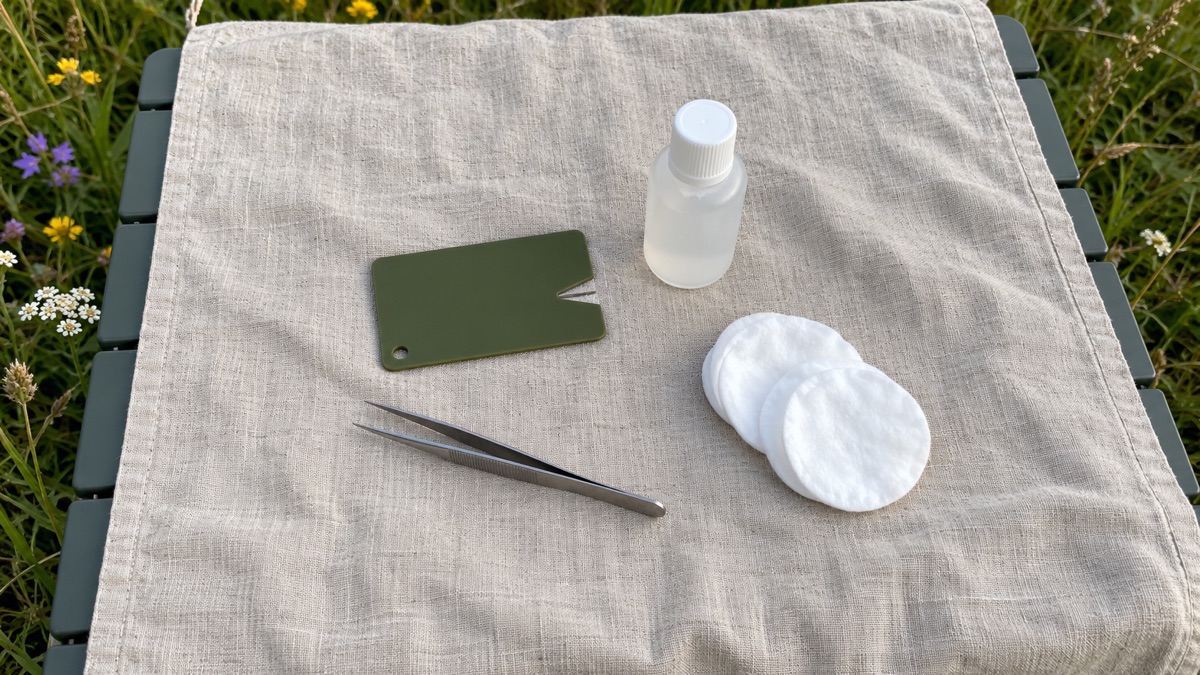
- Use a tick card, tick tweezers or fine-tipped tweezers.
- Grab the tick as close to the skin as possible, at the head and not at the swollen body.
- Pull it out slowly and steadily without squeezing or crushing the body.
- Clean the bite with antiseptic or soap and water.
- Remember the date and the spot. A photo is the easiest way.
What not to do
- Don't put oil, glue, nail polish or alcohol on the tick.
- Don't squeeze or press the tick out with your fingers.
If a tiny bit stays in the skin, that's usually not a problem. The body normally pushes it out on its own.
The weeks after
Keep an eye on the spot for a few weeks. If a red patch or ring appears and grows, or you feel like you have the flu, see a doctor and mention the tick bite. In the UK, that's your GP or NHS 111.