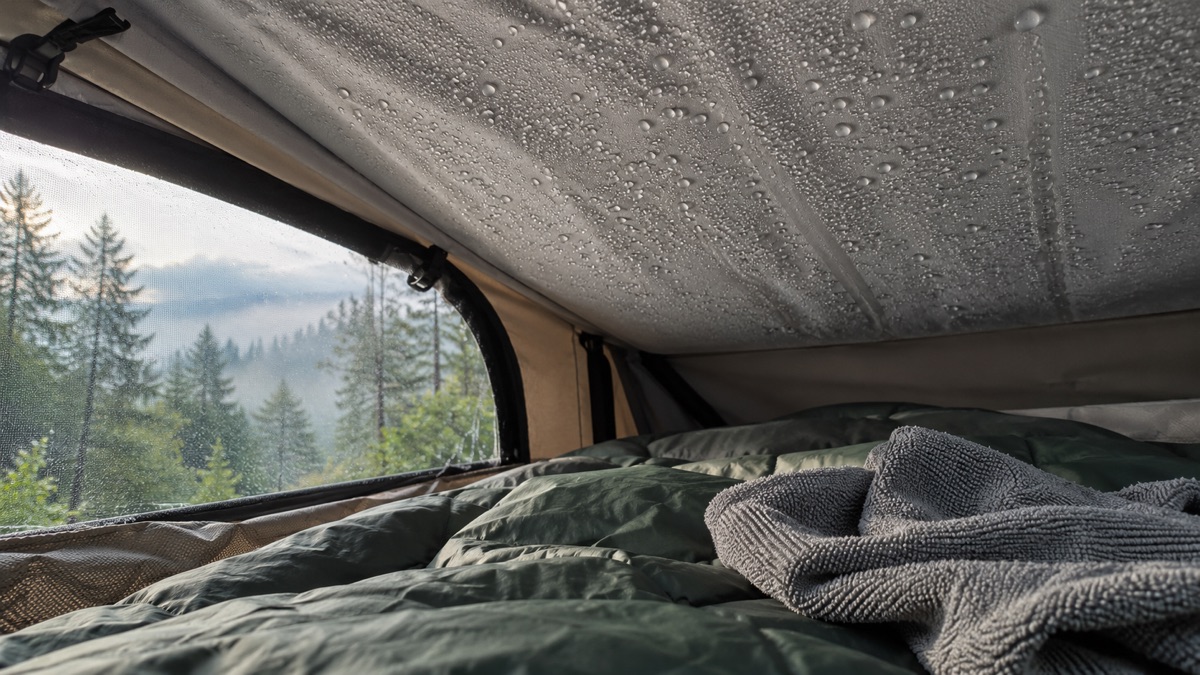
Wet tent walls in the morning don't mean your tent leaks. Usually it's your own breath. Through breathing and skin you give off about a quarter of a litre of water per night, more in a warm sleeping bag. With two of you, that quickly adds up to half a litre. When that warm, moist air meets the cold tent wall, it turns back into water.
When it gets really bad
- On cold, clear nights, when the outer wall cools down a lot.
- When the air is humid, for example after rain, in hollows or right by the water.
- When there's no wind to carry the moist air away.
- When wet clothes, shoes or towels are inside the tent with you.
How to reduce condensation
- Ventilate, even when it's cold. Two openings on opposite sides let the air flow through.
- Don't pitch in hollows or right on the shore.
- Put wet things in the car or the porch, not in the sleeping area.
- In a van, leave the roof vent open a crack.
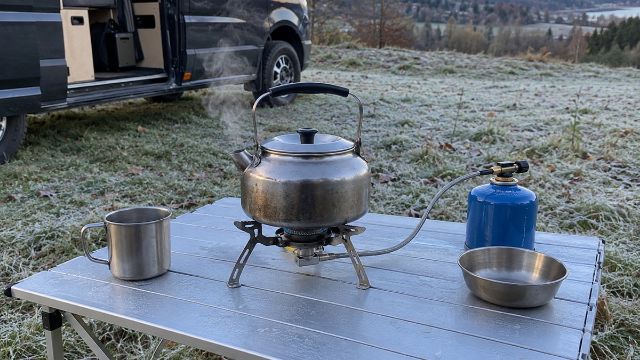
- Never cook inside the tent. It's off limits because of carbon monoxide anyway and adds a lot of moisture.
Roof tent: don't forget the mattress
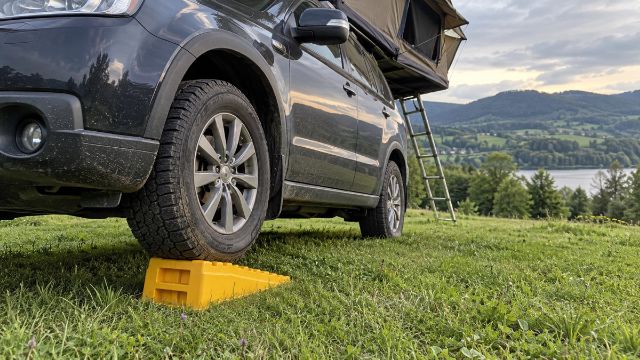
Moisture likes to collect under the mattress in a roof tent, because the floor is cold and the mattress lies flat on it. An anti-condensation mat underneath helps. On longer trips, flip the mattress up now and then and let it dry.