A gas stove is the simplest kitchen in the world. There are still two things you need to know.
Carbon monoxide
Any flame can produce carbon monoxide, especially when it gets too little air or a cold pot sits right in the flame. The gas is odourless and invisible. Even small amounts cause headaches, dizziness and nausea. Larger amounts are deadly, especially in your sleep.
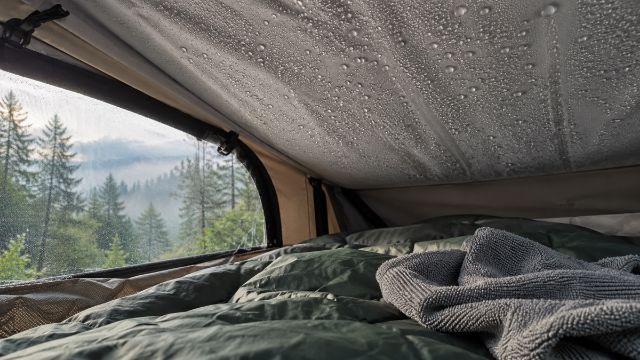
- Never cook in a closed tent, roof tent or car. And never heat with the stove or a portable gas heater.
- A permanently installed, inspected heater that vents its exhaust outside is a different matter. Keep the exhaust outlet outside clear of snow and leaves.
- In a van, only cook with the sliding door or roof hatch open.
- Hang a carbon monoxide alarm made for vehicles in the van, recognisable by the standard EN 50291-2 (in the UK sold as BS EN 50291-2). It costs very little.
- If you get a headache or feel dizzy after cooking, turn off the stove and get into fresh air immediately. If it doesn't get better quickly or someone is drowsy, confused or struggling to breathe, call 112. In the UK and Ireland, 999 works as well.
Cartridges
- If it hisses after screwing it on, unscrew the stove again and don't light it. Let the cartridge air out outdoors and far from flames.
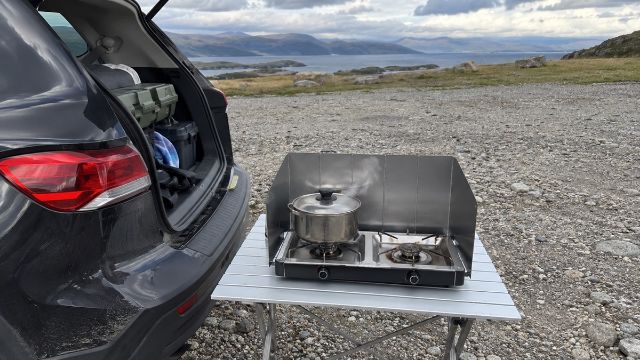
- Put the stove on firm, level ground, away from the tent wall and awning.
- If the burner sits directly on the cartridge, don't use a fully enclosed windshield or oversized pans. Otherwise heat builds up at the cartridge.
- Protect cartridges from heat above 50 degrees. A car in the sun gets hot fast.
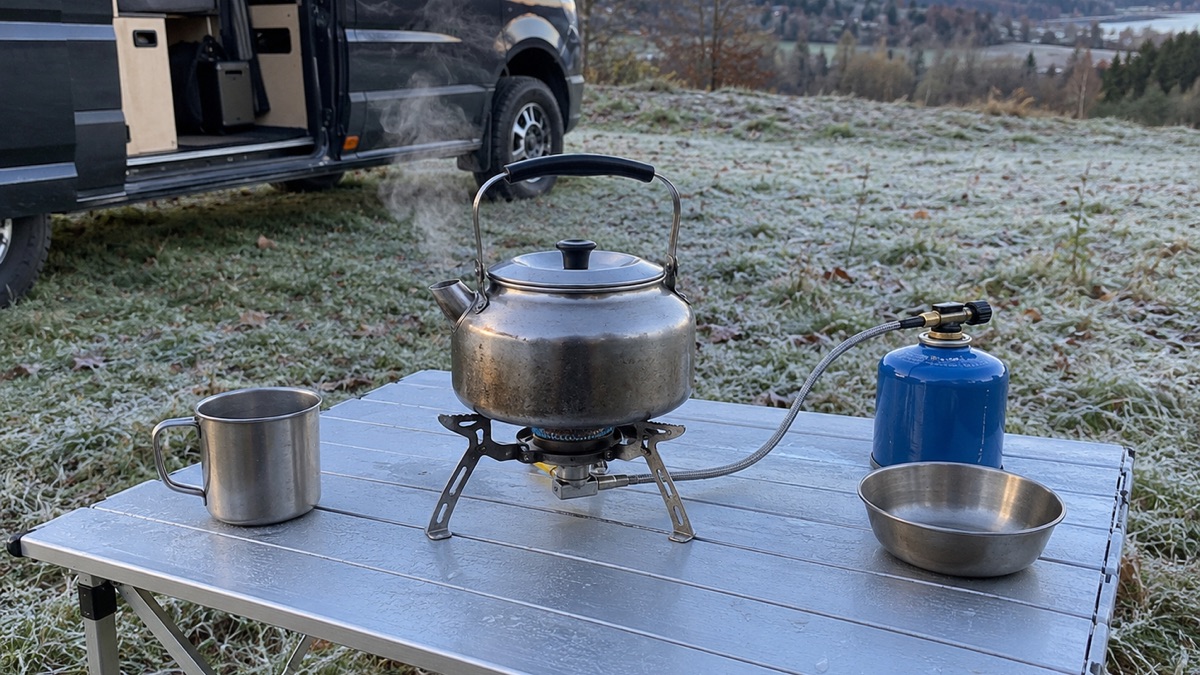
- In the cold, pure butane loses pressure. Below about zero degrees, better to use a winter mix with propane or isobutane.
- Only dispose of empty cartridges when completely empty. How exactly depends on local rules, so check with the campsite or the local council.
Sources
- NHS: Carbon monoxide poisoning
- The Camping and Caravanning Club: Staying safe on the campsite
- nidirect: Carbon monoxide dangers if camping, caravanning or boating
- British Mountaineering Council (BMC): Camping stove safety, how to avoid carbon monoxide and fire risks
- GOV.UK: 999 and 112, the UK's national emergency numbers
- European Commission: 112, the European emergency number
- EN 417: Non-refillable metallic cartridges for liquefied petroleum gases
- EN 50291-2: Carbon monoxide alarms for use in recreational vehicles
- Manufacturer instructions on stove and cartridge